- The new infrastructure integrates large volumes of clinical data to improve management and decision-making
- It incorporates advanced analytics to anticipate care needs
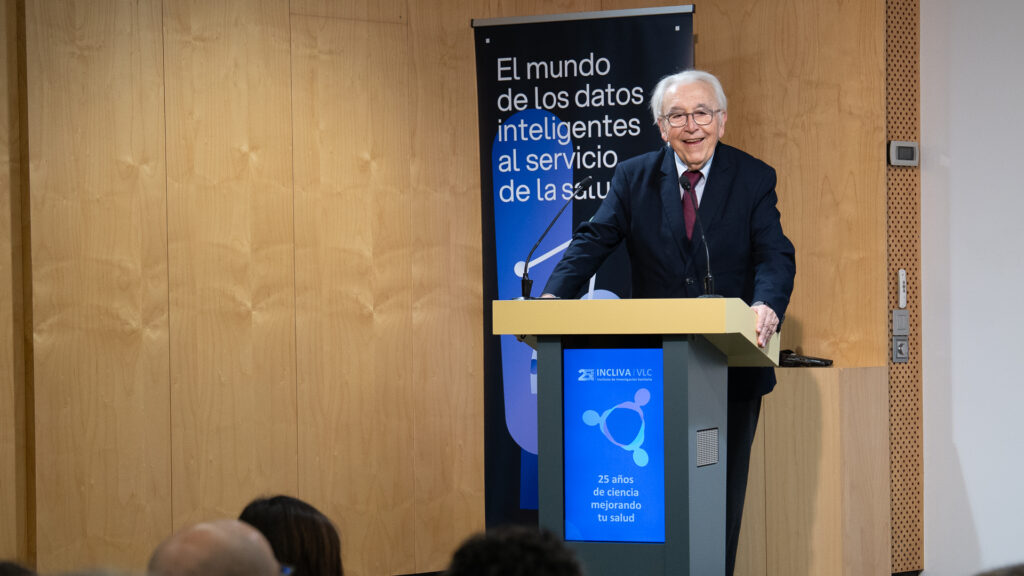
València (23.03.2023). The development of the Integra Cloud platform by INCLIVA has presented both technical and organisational challenges. The project has enabled the creation of a data lake capable of integrating and regularly updating all activity from the Valencia Clínico-Malvarrosa Health Department, managing large volumes of information in an agile, secure and reliable manner. This environment facilitates not only data storage but also its exploitation through advanced analytical techniques, making the results accessible to various professional profiles.
The infrastructure is based on a server located at INCLIVA, equipped with high-capacity, high-speed hybrid storage systems, as well as state-of-the-art processors and graphics cards. These components enable both intensive data processing and the training of artificial intelligence models, whilst also supporting concurrent use by multiple users. All of this is complemented by a robust communications and security layer that guarantees the integrity and protection of the information.
Building on this technological foundation, a modular software ecosystem has been developed, comprising various interconnected components. At its core are the data capture and storage systems, which ensure data quality and persistence. From there, the platform incorporates tools for exploratory analysis, advanced modelling, training of AI algorithms, and interactive visualisation of results. This last aspect is key to facilitating access to information and maximising its practical utility in clinical and management decision-making.
With the aim of simplifying the user experience, all these functionalities are integrated into a single portal that adapts access according to the user’s profile, improving usability and enhancing security through a centralised identity management system.
The four use cases
In addition to technological development, the project has included four use cases designed to demonstrate the platform’s potential in real-world situations. These cover the management of healthcare services, primary care, hospital care and public health. Thanks to these applications, it has been possible to move from traditional descriptive models to predictive and proactive approaches.
Among the most notable results, the platform has enabled the analysis of in-hospital mortality, identifying seasonal patterns and anomalies that facilitate the early detection of critical situations. Furthermore, potentially avoidable hospital admissions associated with chronic conditions such as heart failure, Chronic Obstructive Pulmonary Disease, diabetes or asthma have been identified, paving the way for more effective preventive strategies.
In the field of hospital emergency departments, data analysis has revealed that a large proportion of the cases treated are of low severity, which makes it possible to rethink care pathways and optimise resources. Furthermore, using predictive models based on artificial intelligence, tools have been developed that can anticipate demand for care and forecast hospital admissions, facilitating planning during periods of high pressure.
Primary care also benefits from this approach, as comparative analysis between centres allows for the identification of areas for improvement and the enhancement of care quality, always with the patient at the centre of the system. This approach fosters a continuous cycle of evaluation and optimisation of health outcomes.
Finally, one of the use cases has focused on type 2 diabetes mellitus, highlighting a significant problem of under-diagnosis. The analysis of clinical data has enabled the detection of patients with indicators consistent with the disease who had not previously been identified as such, a situation associated with poorer health outcomes. Early detection, by contrast, is linked to reduced mortality, underscoring the importance of data-driven strategies for improving the prevention and management of chronic diseases.

Funded by the European Union – NextGenerationEU. Views and opinions expressed are however those of the author(s) only and do not necessarily reflect those of the European Union or the European Commission. Neither the European Union nor the European Commission can be held responsible for them.